Friday, October 11, 2013

The projected timing of climate departure from recent variability

PDF

Abstract

Ecological and societal disruptions by modern climate change are critically determined by the time frame over which climates shift beyond historical analogues. Here we present a new index of the year when the projected mean climate of a given location moves to a state continuously outside the bounds of historical variability under alternative greenhouse gas emissions scenarios. Using 1860 to 2005 as the historical period, this index has a global mean of 2069 (±18years s.d.) for near-surface air temperature under an emissions stabilization scenario and 2047 (±14years s.d.) under a ‘business-as-usual’ scenario. Unprecedented climates will occur earliest in the tropics and among low-income countries, highlighting the vulnerability of global biodiversity and the limited governmental capacity to respond to the impacts of climate change. Our findings shed light on the urgency of mitigating greenhouse gas emissions if climates potentially harmful to biodiversity and society are to be prevented.


Diamond drizzle forecast for Saturn and Jupiter

NATURE | NEWS

Article tools

High pressures on Saturn could be squeezing soot into diamonds, which then falls as rain.
NASA/JPL/SPACE SCIENCE INSTITUTE

Researchers have long wondered whether the high pressures inside the giant planets could turn carbon into diamond
2, and even though some researchers dispute their claim, Mona Delitsky of California Specialty Engineering in Flintridge, and Kevin Baines of the University of Wisconsin-Madison, now say it is possible. Forget diamonds in the sky — it may actually be raining diamonds on Saturn and Jupiter, according to two planetary scientists1.
In their scenario, lightning zaps molecules of methane in the upper atmospheres of Saturn and Jupiter, liberating carbon atoms. These atoms then stick onto each other, forming larger particles of carbon soot, which the Cassini spacecraft may have spotted in dark storm clouds on Saturn3. As the soot particles slowly float down through ever-denser layers of gaseous and liquid hydrogen towards the planets' rocky cores, they experience ever greater pressures and temperatures. The soot is compressed into graphite, and then into solid diamonds before reaching a temperature of about 8,000 °C, when the diamond melts, forming liquid diamond raindrops, they say.

Precious rain

Could robots one day collect diamonds on Saturn?
IMAGE COURTESY OF MICHAEL CARROLL ALIEN SEAS: OCEANS IN SPACE (SPRINGER 2013 )
Inside Saturn, the conditions are right for diamond 'hail' to form, beginning at a depth of about 6,000 kilometres into the atmosphere and extending for another 30,000 km below that, says Baines. He estimates that Saturn may harbour about 10 million tonnes of diamond produced this way, with most of it made up of rocks no bigger than a millimetre and perhaps some chunks spanning 10 centimetres.

Thursday, October 10, 2013

Diamond drizzle forecast for Saturn and Jupiter

Lightning storms create carbon soot that might be compressed into diamonds as it falls through the atmosphere.

Article tools

High pressures on Saturn could be squeezing soot into diamonds, which then falls as rain.
NASA/JPL/SPACE SCIENCE INSTITUTE

Researchers have long wondered whether the high pressures inside the giant planets could turn carbon into diamond2, and even though some researchers dispute their claim, Mona Delitsky of California Specialty Engineering in Flintridge, and Kevin Baines of the University of Wisconsin-Madison, now say it is possible. They are laying out their argument this week at a meeting of the American Astronomical Society's Division for Planetary Sciences in Denver, Colorado.Forget diamonds in the sky — it may actually be raining diamonds on Saturn and Jupiter, according to two planetary scientists1.
In their scenario, lightning zaps molecules of methane in the upper atmospheres of Saturn and Jupiter, liberating carbon atoms. These atoms then stick onto each other, forming larger particles of carbon soot, which the Cassini spacecraft may have spotted in dark storm clouds on Saturn3. As the soot particles slowly float down through ever-denser layers of gaseous and liquid hydrogen towards the planets' rocky cores, they experience ever greater pressures and temperatures. The soot is compressed into graphite, and then into solid diamonds before reaching a temperature of about 8,000 °C, when the diamond melts, forming liquid diamond raindrops, they say.

Precious rain

Could robots one day collect diamonds on Saturn?
IMAGE COURTESY OF MICHAEL CARROLL ALIEN SEAS: OCEANS IN SPACE (SPRINGER 2013 )
Inside Saturn, the conditions are right for diamond 'hail' to form, beginning at a depth of about 6,000 kilometres into the atmosphere and extending for another 30,000 km below that, says Baines. He estimates that Saturn may harbour about 10 million tonnes of diamond produced this way, with most of it made up of rocks no bigger than a millimetre and perhaps some chunks spanning 10 centimetres.
"If you had a robot there, it would sit there and collect diamonds raining down," Baines says. Indeed, this is just what happens in a piece of sci-fi the authors wrote to augment a recent non-fiction book chapter4 on the science of Saturn's fluid atmosphere. In their vision of the year 2469, diamonds would be collected on Saturn and used to make the ultra-strong hulls of mining ships delving deep into the planet's interior to collect helium-3 for clean-burning fusion fuel. The diamonds must stay in Saturn to prevent havoc in financial markets on Earth.

Delitsky and Baines concluded that diamond would be stable inside the giant planets by comparing recent studies that experimentally fleshed out the temperatures and pressures at which carbon takes on different forms5, such as solid diamond, and others that modelled the pressure and temperature at different depths within the giant planets6. "We put together two pieces of information from different sources to conclude that diamonds are likely to be existing in the deep interiors of Saturn and Jupiter," says Delitsky.

Thermodynamic objections

But others dispute the researchers' claim, arguing that these two gas giants of the Solar System are probably devoid of bling. David Stevenson, a planetary scientist at the California Institute of Technology in Pasadena, says the pair did not properly account for thermodynamics. Methane forms a very small fraction of the mostly hydrogen atmospheres of Jupiter and Saturn – 0.2% and 0.5%, respectively. In such dilute systems, "thermodynamics favours mixtures", says Stevenson. "It's the same thermodynamics that explains why a small amount of sugar or salt will dissolve in a large amount of water, especially at high temperature," he says. "Even if you made carbon dust, it would just dissolve as it went down into the interior very very quickly.“
Luca Ghiringhelli, a physicist at the Fritz Haber Institute in Berlin, Germany, is also sceptical of the pair's conclusions. His own previous research7 showed that the concentration of carbon is not high enough in Uranus and Neptune — which are several times richer in carbon than Jupiter and Saturn — to grow diamond from the 'ground up', building the crystals atom by atom. He did not model whether diamond could instead form by the compression of soot, but says it is premature to assume that would do so. "It is very optimistic to drive conclusions on the existence of diamonds on Saturn from the scarce data we have, and without a convincing model," he says. That may give financial regulators one less thing to worry about in the coming centuries.
Nature
 
doi:10.1038/nature.2013.13925

Police say 16-year-old Framingham girl allegedly sold pot brownies at school

The Boston Globe

A 16-year-old girl who allegedly sold brownies laced with marijuana at Framingham High School was arrested Monday morning after the trippy treats made two students sick, said Framingham police.
The school nurse had two students come to her office around 9 a.m. complaining that they weren't feeling well. When she asked why, they told her that they had eaten pot brownies they got from a senior at the school

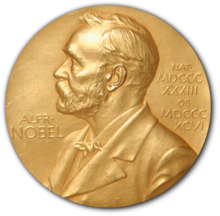
The Nobel Prize in Chemistry 2013


Martin Karplus

Martin Karplus


Michael Levitt

Michael Levitt


Arieh Warshel

Arieh Warshel

The Nobel Prize in Chemistry 2013 was awarded jointly to Martin Karplus, Michael Levitt and Arieh Warshel "for the development of multiscale models for complex chemical systems".

The computer — your Virgil in the world of atoms

Chemists used to create models of molecules using plastic balls and sticks. Today, the modelling is carried out in computers. In the 1970s, Martin KarplusMichael Levitt and Arieh Warshel laid the foundation for the powerful programs that are used to understand and predict chemical processes. Computer models mirroring real life have become crucial for most advances made in chemistry today.
Chemical reactions occur at lightning speed. In a fraction of a millisecond, electrons jump from one atomic nucleus to the other. Classical chemistry has a hard time keeping up; it is virtually impossible to experimentally map every little step in a chemical process. Aided by the methods now awarded with the Nobel Prize in Chemistry, scientists let computers unveil chemical processes, such as a catalyst’s purification of exhaust fumes or the photosynthesis in green leaves.
The work of Karplus, Levitt and Warshel is ground-breaking in that they managed to make Newton’s classical physics work side-by-side with the fundamentally different quantum physics. Previously, chemists had to choose to use either or. The strength of classical physics was that calculations were simple and could be used to model really large molecules. Its weakness, it offered no way to simulate chemical reactions. For that purpose, chemists instead had to use quantum physics. But such calculations required enormous computing power and could therefore only be carried out for small molecules.
This year’s Nobel Laureates in chemistry took the best from both worlds and devised methods that use both classical and quantum physics. For instance, in simulations of how a drug couples to its target protein in the body, the computer performs quantum theoretical calculations on those atoms in the target protein that interact with the drug. The rest of the large protein is simulated using less demanding classical physics.
Today the computer is just as important a tool for chemists as the test tube. Simulations are so realistic that they predict the outcome of traditional experiments.

Tuesday, October 8, 2013

Faeces-filled pill stops gut infection

NATURE | NEWS
Treatment halts recurrence of Clostridium difficile bacteria, but a commercial pill is still far off. 

Article tools

Clostridium difficile bacteria sickens roughly a half million people in the United States each year.
DAVID PHILLIPS/VISUALS UNLIMITED/CORBIS
Patients with a stubborn, debilitating bacterial infection may soon be treated with pills full of microbes derived from human faeces.
Clostridium difficile is a bacterial infection that causes diarrhoea and fever in around half a million people in the United States each year, and is linked to the death of some 14,000 US citizens annually. Some physicians now treat recurrent C. difficile infections with faecal transplants, delivering donor faeces filled with healthy microbes via enemas, colonoscopies or nasal tubes that run directly to the gut.
But capsules containing the same donor bacteria are also effective at giving these 'gut microbiome transplants', according to results presented on 3 October at a meeting in San Francisco, California. 

C. difficile 
often sets in after antibiotic use has disrupted a person's normal balance of gut bacteria. A gut microbiome transplant using bacteria from the faeces of a healthy donor restores that balance, and can be highly effective against C. difficile, which is notoriously difficult to treat with antibiotics.Thomas Louie, an infectious-disease specialist at the University of Calgary in Alberta, Canada, treated 31 patients with the bacterial pills, curing all but one. Because the pills are less invasive than other techniques for treating the disease, they could make gut microbiome transplants available to more patients — including those who, for medical reasons, cannot tolerate an enema or tube from the nose to the small intestine. Louie had initially created the capsules when treating such a patient.

Gut reaction

The patients in Louie’s study each swallowed 24–34 freshly assembled capsules of bacteria, which were coated with gelatin to survive the stomach and reach the intestines. The team followed the patients' progress for up to one year afterwards by sequencing the gut microbiome. They found  that C. difficile had disappeared and bacteria asociated with a healthy gut microbiome, such as BacteroidesClostridium coccoidesClostridium leptum,PrevotellaBifidobacteria and Desulfovibrio, increased in numbers.
“This pill idea really is a big advance,” says Colleen Kelly, a gastroenterologist at Brown University's Alpert Medical School in Providence, Rhode Island, who performs faecal microbiome transplants using colonoscopy.
A pill made of bacteria grown in a laboratory rather than those extracted from donor faeces is a future possibility, and Louie says that he has been contacted by parties interested in commercializing his pill. He adds that his team is currently experimenting with freezing bacteria for C. difficiletreatment.
However, economic barriers to such a synthetic pill are significant. Elaine Petrof, an infectious-disease expert at Queen’s University in Kingston, Ontario, has created RePOOPulate, a mix of 33 different types of bacteria grown in the lab to mimic the microbiome1. Her team spent two years getting the equipment to grow the bacteria up and running, but the process is still expensive and the bacteria finicky. “Honestly, good luck to you,” she says to companies trying to commercialize the technology.
The high cost of producing bacteria in this way would be less of a barrier if the alternative were not so cheap. As Tom Moore, a physician and infectious-disease specialist in Wichita, Kansas, puts it: “It’ll be difficult to compete with the ready availability and very cheap costs of human poop.”

Silk Road accused Ross Ulbricht appears in court


Silk Road screenshot
The Silk Road was known as a place to buy and sell illegal drugs

The alleged mastermind behind the online illegal drugs marketplace Silk Road is too dangerous to be bailed, US prosecutors have said.
Ross Ulbricht, 29, was arrested this week and is charged with being the administrator of the site which has now been shut down.
He is also accused of trying to arrange the killing of one of the site's users.
"We deny all charges and that is the end of the discussion at this point," Mr Ulbricht's lawyer said.
Mr Ulbricht appeared in a San Francisco court on Friday wearing a green T-shirt under red jail clothes and had his ankles shackled.