Tuesday, October 9, 2012

G-Proteins

Read these:

Advanced Information

Popular Information

Smart receptors on cell surfaces

Your body is a fine-tuned system of interactions between billions of cells. Each cell has tiny receptors that enable it to sense its environment, so it can adapt to new situtations. Robert Lefkowitz and Brian Kobilka are awarded the 2012 Nobel Prize in Chemistry for groundbreaking discoveries that reveal the inner workings of an important family of such receptors: G-protein–coupled receptors.
For a long time, it remained a mystery how cells could sense their environment. Scientists knew that hormones such as adrenalin had powerful effects: increasing blood pressure and making the heart beat faster. They suspected that cell surfaces contained some kind of recipient for hormones. But what these receptors actually consisted of and how they worked remained obscured for most of the 20th Century.
Lefkowitz started to use radioactivity in 1968 in order to trace cells' receptors. He attached an iodine isotope to various hormones, and thanks to the radiation, he managed to unveil several receptors, among those a receptor for adrenalin: β-adrenergic receptor. His team of researchers extracted the receptor from its hiding place in the cell wall and gained an initial understanding of how it works.
The team achieved its next big step during the 1980s. The newly recruited Kobilka accepted the challenge to isolate the gene that codes for the β-adrenergic receptor from the gigantic human genome. His creative approach allowed him to attain his goal. When the researchers analyzed the gene, they discovered that the receptor was similar to one in the eye that captures light. They realized that there is a whole family of receptors that look alike and function in the same manner.
Today this family is referred to as G-protein–coupled receptors. About a thousand genes code for such receptors, for example, for light, flavour, odour, adrenalin, histamine, dopamine and serotonin. About half of all medications achieve their effect through G-protein–coupled receptors.
The studies by Lefkowitz and Kobilka are crucial for understanding how G-protein–coupled receptors function. Furthermore, in 2011, Kobilka achieved another break-through; he and his research team captured an image of the β-adrenergic receptor at the exact moment that it is activated by a hormone and sends a signal into the cell. This image is a molecular masterpiece – the result of decades of research.


   Physics Nobel Prize for quantum phenomena of single photons and atoms.


Thousands Exposed to Tainted Steroid, C.D.C. Says


About 13,000 people may have been exposed to the tainted steroid that has been linked to a growing outbreak of fungal meningitis, a spokesman for the Centers for Disease Control and Prevention said on Monday. The outbreak has killed 8 people and sickened 97 others in 23 states. More cases are expected. The figure, the first estimate of how many people were injected with any of the 17,676 doses shipped around the country, is based on reports from state health departments and clinics that used the drug, methylprednisolone acetate. It was injected near the spine to ease back and neck pain, a treatment that about five million people in the United States undergo every year.

The company that made the drug, the New England Compounding Center in Framingham, Mass., has shut down, surrendered its license and recalled all its products, not just the steroid.
The disease centers said that the company began shipping potentially contaminated lots of the drug on May 21, and that people who had the treatment for back pain — called a lumbar epidural steroid injection — after that date should seek medical attention if they develop symptoms like severe or worsening headache, fever, stiff neck, dizziness, weakness, sensitivity to light or loss of balance.
It is not known if all the vials of medicine in the implicated lots were contaminated with the disease-causing fungus, or if everyone exposed to it will become ill. Curtis Allen, the spokesman for the disease centers, predicted that most exposed people would not become sick.
But fungal meningitis can be severe and can cause strokes, and early treatment might save a patient’s life. Health officials say people who may have been exposed must be tracked down immediately so that those with symptoms can be treated as soon as possible. The treatment consists of an antifungal drug, either voriconazole or amphotericin B, and sometimes both. Months of treatment are needed. Because the drugs can have serious side effects, including kidney problems, they are given only to people who have symptoms, and are not used as a preventive measure in those who are not ill.
This type of meningitis is not contagious. Despite the treatment, some patients are in critical condition, doctors said.
Dr. John Jernigan, a medical epidemiologist at the disease centers, said, “This is a very rare form of meningitis and there is not a great deal of clinical experience with it.


Attention Disorder or Not, Pills to Help in School


CANTON, Ga. — When Dr. Michael Anderson hears about his low-income patients struggling in elementary school, he usually gives them a taste of some powerful medicine: Adderall.
The pills boost focus and impulse control in children with attention deficit hyperactivity disorder. Although A.D.H.D is the diagnosis Dr. Anderson makes, he calls the disorder “made up” and “an excuse” to prescribe the pills to treat what he considers the children’s true ill — poor academic performance in inadequate schools.
“I don’t have a whole lot of choice,” said Dr. Anderson, a pediatrician for many poor families in Cherokee County, north of Atlanta. “We’ve decided as a society that it’s too expensive to modify the kid’s environment. So we have to modify the kid.”
Dr. Anderson is one of the more outspoken proponents of an idea that is gaining interest among some physicians. They are prescribing stimulants to struggling students in schools starved of extra money — not to treat A.D.H.D., necessarily, but to boost their academic performance.
It is not yet clear whether Dr. Anderson is representative of a widening trend. But some experts note that as wealthy students abuse stimulants to raise already-good grades in colleges and high schools, the medications are being used on low-income elementary school children with faltering grades and parents eager to see them succeed. 
...
Dr. Nancy Rappaport, a child psychiatrist in Cambridge, Mass., who works primarily with lower-income children and their schools, added: “We are seeing this more and more. We are using a chemical straitjacket instead of doing things that are just as important to also do, sometimes more.”
Dr. Anderson’s instinct, he said, is that of a “social justice thinker” who is “evening the scales a little bit.” He said that the children he sees with academic problems are essentially “mismatched with their environment” — square pegs chafing the round holes of public education. Because their families can rarely afford behavior-based therapies like tutoring and family counseling, he said, medication becomes the most reliable and pragmatic way to redirect the student toward success.
“People who are getting A’s and B’s, I won’t give it to them,” he said. For some parents the pills provide great relief. Jacqueline Williams said she can’t thank Dr. Anderson enough for diagnosing A.D.H.D. in her children — Eric, 15; Chekiara, 14; and Shamya, 11 — and prescribing Concerta, a long-acting stimulant, for them all. She said each was having trouble listening to instructions and concentrating on schoolwork.
“My kids don’t want to take it, but I told them, ‘These are your grades when you’re taking it, this is when you don’t,’ and they understood,” Ms. Williams said, noting that Medicaidcovers almost every penny of her doctor and prescription costs.
Some experts see little harm in a responsible physician using A.D.H.D. medications to help a struggling student. Others — even among the many like Dr. Rappaport who praise the use of stimulants as treatment for classic A.D.H.D. — fear that doctors are exposing children to unwarranted physical and psychological risks. Reported side effects of the drugs have included growth suppression, increased blood pressure and, in rare cases, psychotic episodes.
The disorder, which is characterized by severe inattention and impulsivity, is an increasingly common psychiatric diagnosis among American youth: about 9.5 percent of Americans ages 4 to 17 were judged to have it in 2007, or about 5.4 million children, according to the Centers for Disease Control and Prevention.
The reported prevalence of the disorder has risen steadily for more than a decade, with some doctors gratified by its widening recognition but others fearful that the diagnosis, and the drugs to treat it, are handed out too loosely and at the exclusion of nonpharmaceutical therapies.
The Drug Enforcement Administration classifies these medications as Schedule II Controlled Substances because they are particularly addictive. Long-term effects of extended use are not well understood, said many medical experts. Some of them worry that children can become dependent on the medication well into adulthood, long after any A.D.H.D. symptoms can dissipate.
According to guidelines published last year by the American Academy of Pediatrics, physicians should use one of several behavior rating scales, some of which feature dozens of categories, to make sure that a child not only fits criteria for A.D.H.D., but also has no related condition like dyslexia or oppositional defiant disorder, in which intense anger is directed toward authority figures. However, a 2010 study in the Journal of Attention Disorders suggested that at least 20 percent of doctors said they did not follow this protocol when making their A.D.H.D. diagnoses, with many of them following personal instinct.
On the Rocafort family’s kitchen shelf in Ball Ground, Ga., next to the peanut butter and chicken broth, sits a wire basket brimming with bottles of the children’s medications, prescribed by Dr. Anderson: Adderall for Alexis, 12; and Ethan, 9; Risperdal (an antipsychotic for mood stabilization) for Quintn and Perry, both 11; and Clonidine (a sleep aid to counteract the other medications) for all four, taken nightly.
Quintn began taking Adderall for A.D.H.D. about five years ago, when his disruptive school behavior led to calls home and in-school suspensions. He immediately settled down and became a more earnest, attentive student — a little bit more like Perry, who also took Adderall for his A.D.H.D.
When puberty’s chemical maelstrom began at about 10, though, Quintn got into fights at school because, he said, other children were insulting his mother. The problem was, they were not; Quintn was seeing people and hearing voices that were not there, a rare but recognized side effect of Adderall. After Quintn admitted to being suicidal, Dr. Anderson prescribed a week in a local psychiatric hospital, and a switch to Risperdal.
While telling this story, the Rocaforts called Quintn into the kitchen and asked him to describe why he had been given Adderall.
“To help me focus on my school work, my homework, listening to Mom and Dad, and not doing what I used to do to my teachers, to make them mad,” he said. He described the week in the hospital and the effects of Risperdal: “If I don’t take my medicine I’d be having attitudes. I’d be disrespecting my parents. I wouldn’t be like this.”
Despite Quintn’s experience with Adderall, the Rocaforts decided to use it with their 12-year-old daughter, Alexis, and 9-year-old son, Ethan. These children don’t have A.D.H.D., their parents said. The Adderall is merely to help their grades, and because Alexis was, in her father’s words, “a little blah.”
”We’ve seen both sides of the spectrum: we’ve seen positive, we’ve seen negative,” the father, Rocky Rocafort, said. Acknowledging that Alexis’s use of Adderall is “cosmetic,” he added, “If they’re feeling positive, happy, socializing more, and it’s helping them, why wouldn’t you? Why not?”
Dr. William Graf, a pediatrician and child neurologist who serves many poor families in New Haven, said that a family should be able to choose for itself whether Adderall can benefit its non-A.D.H.D. child, and that a physician can ethically prescribe a trial as long as side effects are closely monitored. He expressed concern, however, that the rising use of stimulants in this manner can threaten what he called “the authenticity of development.” 
...
He added, “We might not know the long-term effects, but we do know the short-term costs of school failure, which are real. I am looking to the individual person and where they are right now. I am the doctor for the patient, not for society.”
Monday, October 8, 2012


Impacts of genetically engineered crops on pesticide use in the U.S. -- the first sixteen years


Background

Genetically engineered, herbicide-resistant and insect-resistant crops have been remarkable commercial successes in the United States. Few independent studies have calculated their impacts on pesticide use per hectare or overall pesticide use, or taken into account the impact of rapidly spreading glyphosate-resistant weeds. A model was developed to quantify by crop and year the impacts of six major transgenic pest-management traits on pesticide use in the U.S. over the 16-year period, 1996--2011: herbicide-resistant corn, soybeans, and cotton; Bacillus thuringiensis (Bt) corn targeting the European corn borer; Bt corn for corn rootworms; and Bt cotton for Lepidopteron insects.

Results

Herbicide-resistant crop technology has led to a 239 million kilogram (527 million pound) increase in herbicide use in the United States between 1996 and 2011, while Bt crops have reduced insecticide applications by 56 million kilograms (123 million pounds). Overall, pesticide use increased by an estimated 183 million kgs (404 million pounds), or about 7%.

Conclusions

Contrary to often-repeated claims that today's genetically-engineered crops have, and are reducing pesticide use, the spread of glyphosate-resistant weeds in herbicide-resistant weed management systems has brought about substantial increases in the number and volume of herbicides applied. If new genetically engineered forms of corn and soybeans tolerant of 2,4-D are approved, the volume of 2,4-D sprayed could drive herbicide usage upward by another approximate 50%. The magnitude of increases in herbicide use on herbicide-resistant hectares has dwarfed the reduction in insecticide use on Bt crops over the past 16 years, and will continue to do so for the foreseeable future.


Marijuana Only for the Sick? A Farce, Some Angelenos Say


 One year after federal law enforcement officials began cracking down on California’s medical marijuana industry with a series of high-profile arrests around the state, they finally moved into Los Angeles last month, giving 71 dispensaries until Tuesday to shut down. 

At the same time, because of a well-organized push by a new coalition of medical marijuana supporters, the City Council last week repealed a ban on the dispensaries that it had passed only a couple of months earlier. 

Vague state laws governing medical marijuana have allowed recreational users of the drug to take advantage of the dispensaries, say supporters of the Los Angeles ban and the federal crackdown. Here on the boardwalk of Venice Beach, pitchmen dressed all in marijuana green approach passers-by with offers of a $35, 10-minute evaluation for a medical marijuana recommendation for everything from cancer to appetite loss.
Nearly 180 cities across the state have banned dispensaries, and lawsuits challenging the bans have reached the State Supreme Court. In more liberal areas, some 50 municipalities have passed medical marijuana ordinances, but most have suspended the regulation of dispensaries because of the federal offensive, according to Americans for Safe Access, a group that promotes access to medical marijuana. San Francisco and Oakland, the fiercest defenders of medical marijuana, have continued to issue permits to new dispensaries.
Despite years of trying fruitlessly to regulate medical marijuana, California again finds itself in a marijuana-laced chaos over a booming and divisive industry.
Nobody even knows how many medical marijuana dispensaries are in Los Angeles. Estimates range from 500 to more than 1,000. The only certainty, supporters and opponents agree, is that they far outnumber Starbucks.


“Medical marijuana dispensaries are very much like what they distribute: they’re weeds,” he said. “You cut them down, you leave, and then they sprout back up.


Unlikely, and Large, Marijuana Crop Is Found in a Chicago Industrial Park

Teresa Crawford/Associated Press
The police in Chicago bulldozed a patch of marijuana about the size of two football fields on the far South Side on Wednesday.

CHICAGO — Of all the remote hillsides where a patch of marijuanamight grow unnoticed, just off a major highway in the nation’s third most populous city hardly seems the place. Yet that was precisely where the authorities this week uncovered a virtual farm of marijuana — plants up to 10 feet tall in perfect rows across a stretch of land the size of two football fields, and all of it within Chicago’s city limits, not far from the Bishop Ford Freeway.
.
.
.
“My partner and I were just saying, now every plant looks like dope to us,” Officer Graney said, after his usual helicopter patrol on Thursday.
Still, if the discovery appeared to be some modern twist on the city’s 19th-century motto, “Urbs in horto” (Latin for “City in a garden”), no one here seemed particularly concerned that a rash of outdoor marijuana operations was now conceivable in Chicago.
“Frankly, there’s just not many wide open places,” Chief Roti said.

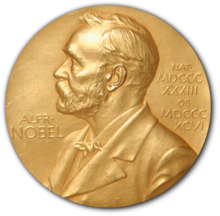
Nobel Prize in Medicine Awarded


The Nobel Assembly at Karolinska Institutet has today decided to award

The Nobel Prize in Physiology or Medicine 2012
jointly to
John B. Gurdon and Shinya Yamanaka

for the discovery that mature cells can be reprogrammed to become pluripotent

Summary

The Nobel Prize recognizes two scientists who discovered that mature, specialised cells can be reprogrammed to become immature cells capable of developing into all tissues of the body. Their findings have revolutionised our understanding of how cells and organisms develop.
John B. Gurdon discovered in 1962 that the specialisation of cells is reversible. In a classic experiment, he replaced the immature cell nucleus in an egg cell of a frog with the nucleus from a mature intestinal cell. This modified egg cell developed into a normal tadpole. The DNA of the mature cell still had all the information needed to develop all cells in the frog.
Shinya Yamanaka discovered more than 40 years later, in 2006, how intact mature cells in mice could be reprogrammed to become immature stem cells. Surprisingly, by introducing only a few genes, he could reprogram mature cells to become pluripotent stem cells, i.e. immature cells that are able to develop into all types of cells in the body.
These groundbreaking discoveries have completely changed our view of the development and cellular specialisation. We now understand that the mature cell does not have to be confined forever to its specialised state. Textbooks have been rewritten and new research fields have been established. By reprogramming human cells, scientists have created new opportunities to study diseases and develop methods for diagnosis and therapy.

Life – a journey towards increasing specialisation

All of us developed from fertilized egg cells. During the first days after conception, the embryo consists of immature cells, each of which is capable of developing into all the cell types that form the adult organism. Such cells are called pluripotent stem cells. With further development of the embryo, these cells give rise to nerve cells, muscle cells, liver cells and all other cell types - each of them specialised to carry out a specific task in the adult body. This journey from immature to specialised cell was previously considered to be unidirectional. It was thought that the cell changes in such a way during maturation that it would no longer be possible for it to return to an immature, pluripotent stage.

Frogs jump backwards in development

John B. Gurdon challenged the dogma that the specialised cell is irreversibly committed to its fate. He hypothesised that its genome might still contain all the information needed to drive its development into all the different cell types of an organism. In 1962, he tested this hypothesis by replacing the cell nucleus of a frog's egg cell with a nucleus from a mature, specialised cell derived from the intestine of a tadpole. The egg developed into a fully functional, cloned tadpole and subsequent repeats of the experiment yielded adult frogs. The nucleus of the mature cell had not lost its capacity to drive development to a fully functional organism.
Gurdon's landmark discovery was initially met with scepticism but became accepted when it had been confirmed by other scientists. It initiated intense research and the technique was further developed, leading eventually to the cloning of mammals. Gurdon's research taught us that the nucleus of a mature, specialized cell can be returned to an immature, pluripotent state. But his experiment involved the removal of cell nuclei with pipettes followed by their introduction into other cells. Would it ever be possible to turn an intact cell back into a pluripotent stem cell?

A roundtrip journey – mature cells return to a stem cell state

Shinya Yamanaka was able to answer this question in a scientific breakthrough more than 40 years after Gurdon´s discovery. His research concerned embryonal stem cells, i.e. pluripotent stem cells that are isolated from the embryo and cultured in the laboratory. Such stem cells were initially isolated from mice by Martin Evans (Nobel Prize 2007) and Yamanaka tried to find the genes that kept them immature. When several of these genes had been identified, he tested whether any of them could reprogram mature cells to become pluripotent stem cells.
Yamanaka and his co-workers introduced these genes, in different combinations, into mature cells from connective tissue, fibroblasts, and examined the results under the microscope. They finally found a combination that worked, and the recipe was surprisingly simple. By introducing four genes together, they could reprogram their fibroblasts into immature stem cells! 
The resulting induced pluripotent stem cells (iPS cells) could develop into mature cell types such as fibroblasts, nerve cells and gut cells. The discovery that intact, mature cells could be reprogrammed into pluripotent stem cells was published in 2006 and was immediately considered a major breakthrough.

From surprising discovery to medical use

The discoveries of Gurdon and Yamanaka have shown that specialised cells can turn back the developmental clock under certain circumstances. Although their genome undergoes modifications during development, these modifications are not irreversible. We have obtained a new view of the development of cells and organisms.
Research during recent years has shown that iPS cells can give rise to all the different cell types of the body. These discoveries have also provided new tools for scientists around the world and led to remarkable progress in many areas of medicine. iPS cells can also be prepared from human cells.
For instance, skin cells can be obtained from patients with various diseases, reprogrammed, and examined in the laboratory to determine how they differ from cells of healthy individuals. Such cells constitute invaluable tools for understanding disease mechanisms and so provide new opportunities to develop medical therapies.


Sir John B. Gurdon was born in 1933 in Dippenhall, UK. He received his Doctorate from the University of Oxford in 1960 and was a postdoctoral fellow at California Institute of Technology. He joined Cambridge University, UK, in 1972 and has served as Professor of Cell Biology and Master of Magdalene College. Gurdon is currently at the Gurdon Institute in Cambridge.
Shinya Yamanaka was born in Osaka, Japan in 1962. He obtained his MD in 1987 at Kobe University and trained as an orthopaedic surgeon before switching to basic research. Yamanaka received his PhD at Osaka City University in 1993, after which he worked at the Gladstone Institute in San Francisco and Nara Institute of Science and Technology in Japan. Yamanaka is currently Professor at Kyoto University and also affiliated with the Gladstone Institute.


Key publications:

Gurdon, J.B. (1962). The developmental capacity of nuclei taken from intestinal epithelium cells of feeding tadpoles. Journal of Embryology and Experimental Morphology 10:622-640.
Takahashi, K., Yamanaka, S. (2006). Induction of pluripotent stem cells from mouse embryonic and adult fibroblast cultures by defined factors. Cell 126:663-676.

Friday, October 5, 2012

Mouse Stem Cells Yield Viable Eggs


Experimental approach might provide insights to support human fertility
Web edition : Thursday, October 4th, 2012
  Text Size
access
NEW GENERATIONA female mouse that grew from an egg made from stem cells is fertile and produced healthy pups of her own. The mice are part of a study in which Japanese scientists have produced functional egg cells from stem cells for the first time.Courtesy of Katsuhiko Hayashi/Kyoto Univ.
Some baby mice born in Japan are living proof that mouse stem cells taken from embryos or created by reprogramming fetal tissue can be used to make viable egg cells.
Researchers had already created functional sperm from stem cells, and some groups have reported making eggs, or oocytes, but those had never been shown to produce offspring. Now, Mitinori Saitou of Kyoto University in Japan and colleagues have coaxed mouse stem cell to make eggs that produce normal, fertile offspring, the researchers report online October 4 in Science.
“This is really pioneering research,” says Charles Easley, a reproductive stem cell biologist at Emory University School of Medicine in Atlanta.
The researchers have gone a step beyond making cells that merely look like eggs in a lab dish. “This paper produces something that looks like oocytes, smells like oocytes and tastes like oocytes in a way no one has done before,” says David Albertini, a reproductive scientist at the University of Kansas Medical Center in Kansas City.
While the evidence that the Japanese researchers have transformed mouse stem cells into functional female gametes is compelling, Albertini doesn’t think the feat will be repeated with human stem cells because they are far less flexible than their mouse counterparts. The new technology might provide a way to test the effect that chemicals in the environment may have on fertility and give scientists new information about how eggs age, possibly leading to fertility-extending treatments, he says.
In the new study, Saitou and colleagues started with stem cells from very early mouse embryos as well as stem cells reprogrammed from fetal cells, known as induced pluripotent stem cells. Saitou’s team manipulated the activity of a few genes in the stem cells to turn them into cells that resemble precursors of gametes, as eggs and sperm are sometimes known.
These primordial germ cell–like cells, as they are called, were mixed with support cells from an embryonic ovary and then transplanted into adult mice. Once the precursor cells had developed into oocytes, the researchers pulled them out and fertilized them in the lab before implanting the resulting embryos in female mice.
The oocytes made from either type of stem cell produced mouse pups 3.9 percent of the time. That rate is lower than for primordial germ cells taken directly from mouse embryos, which the researchers found produced pups 17.3 percent of the time. Oocytes taken from the ovaries of 3-week-old mice generated offspring 12.7 percent of the time. Female pups resulting from stem cell–derived eggs grew up to become fertile adults, the researchers report.
About half of the stem–cell derived oocytes had an extra set of chromosomes, the researchers discovered. That indicates a breakdown in meiosis, the process of halving the genetic material doled out to eggs and sperm. Saitou acknowledges there is room for improvement in his group’s technique.
Previous experiments have tried to produce oocytes in a laboratory dish. The Japanese group’s success argues that other cells in the ovary probably help guide primordial cells to become mature eggs. “It’s not like oocytes just spring up out of nowhere,” says Easley. “They’ve got support cells all around them.” Scientists will need to figure out what the support cells do to help developing oocytes reach their full potential to mimic the process in the lab.
It may not be practical to use the same technique to try to generate human oocytes: The support cells used in the study were isolated from embryonic mouse ovaries at a stage equivalent to that of 10- to 14-week old human fetuses.
“If it is dependent on fetal ovaries, that makes it completely impractical for human use,” says Jonathan Tilly, a reproductive biologist at Massachusetts General Hospital and Harvard Medical School in Boston. The method also requires surgery to put the reconstituted ovary into a body to mature, and more surgery to retrieve the eggs — another possible barrier for use in people.

Science News